
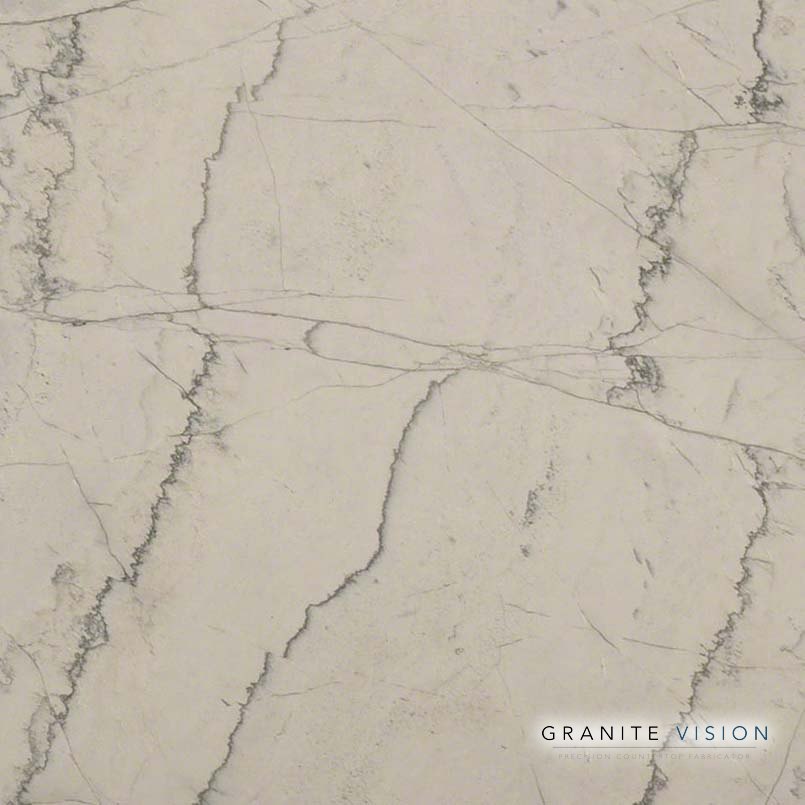
Quartzite vs. Marble Countertops: Calacatta Macaubas Quartzite vs. Calacatta Marble
Quartzite and marble are both natural stones, and both can give you a bright white kitchen with soft gray veins. Many homeowners in Virginia come to our showrooms asking for “the marble look,” then find out quartzite looks almost the same. The two stones behave very differently once you start cooking, though. Here is a plain comparison, using two slabs we install often: Calacatta Macaubas Quartzite and Calacatta Marble.
The quick answer
- Choose quartzite, like Calacatta Macaubas Quartzite, if you want a white natural stone that is hard, resists scratches, handles heat well and will not etch from lemon or vinegar.
- Choose marble, like Calacatta Marble, if you love the classic Italian look and you are happy with a surface that softens and develops a patina over the years.
What each stone is
Quartzite is a natural stone made mostly of quartz grains that were fused together under heat and pressure. It is harder than granite and much harder than marble. Most quartzites we install come from Brazil.
Marble is a natural stone made mostly of calcite or dolomite. These minerals are softer than quartz and react with acids. Classic white marbles like Calacatta and Carrara come from Italy.
Side-by-side comparison
| Quartzite | Marble | |
|---|---|---|
| Main mineral | Quartz | Calcite or dolomite |
| Hardness | Harder than granite; resists scratches | Softer; can scratch with metal |
| Lemon, vinegar, wine | Should not etch | Etches (dull spots) |
| Sealing | About once a year | Every six to twelve months |
| Look | White to cream, soft gray veins; every slab unique | Bright white with gray or gold veins; every slab unique |
| Installed price at Granite Vision | $70–$150 per sq ft | $50–$150 per sq ft |
Prices depend on the slab you pick, the edge profile and the number of cutouts. We give you an exact number after we see your layout.
Etching: the biggest difference
Etching is not a stain. It is a dull, lighter spot where an acid has eaten into the polished surface of marble. Lemon juice, tomato sauce, vinegar, wine and some cleaners can all do it, sometimes in a few minutes.
Sealer helps marble resist stains, but it does not stop etching. That is why we often suggest a honed finish for marble kitchens: etch marks show much less on honed stone than on polished.
True quartzite does not contain calcite or dolomite, so it should not etch. For a family that cooks every day, that is usually the deciding point.
Watch out for “soft quartzite”
Some stones sold as quartzite are really marble. A good example is Super White. It is often called a quartzite, but it is a dolomitic marble, so it is a little softer and can etch. It is still a beautiful stone. You just need to know what you are buying.
Geologists suggest two simple home tests on a sample. First, drag a sharp corner of the stone across a piece of glass: quartzite scratches glass, marble does not. Second, leave a little lemon juice or vinegar on the sample for 5–10 minutes, wipe it off and look at the surface from a low angle. A dull spot means it etches. Ask us for a sample of the exact stone you are considering, and we will go over the results with you.
Look and design
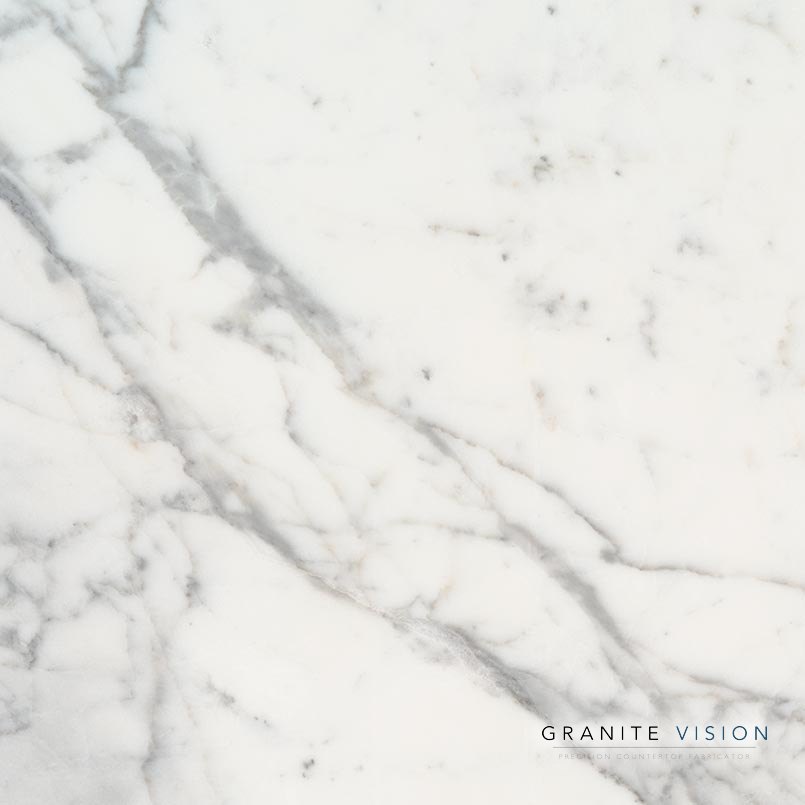
From across the room, these stones can look nearly the same. Calacatta Marble is usually brighter white with bolder gray and gold veins. Calacatta Macaubas has a soft white to warm cream background with fine gray veins that branch across the slab.
Other white quartzites to compare:
- White Macaubas Quartzite: long, straight gray and taupe lines for a calm, modern look.
- Taj Mahal Quartzite: creamy ivory with soft taupe and light gold veins.
If you love marble, Carrara Marble is the softer, cooler gray option with fine, feathery veins.
Which one is right for you?
You cook a lot and have kids
Quartzite. It resists scratches and will not etch from everyday spills.
You want the classic marble kitchen and like a lived-in look
Marble. Many owners enjoy the patina. A honed finish helps.
A bathroom vanity, bar or fireplace surround
Either works well. Marble is a great fit in rooms that see fewer acidic spills.
Caring for each stone
Quartzite: wipe with warm water and mild soap, use cutting boards and trivets, and reseal about once a year. We seal it at installation and show you an easy water test.
Marble: use pH-neutral cleaners, wipe up acids quickly, and reseal every six to twelve months.
Pick your slab in person
Every quartzite and marble slab is one of a kind, so we recommend choosing your exact slab before we cut it. Visit our showrooms in Woodbridge, Stafford, Fredericksburg or Charlottesville, or walk our 15,000 sq ft indoor slab yard in Stafford. Since 2014 we have completed more than 17,000 projects. We measure with digital laser templating, cut every piece on our water jet CNC in our own shop, and install 5–7 days after templating with a 1-year workmanship warranty. We also remove your old countertops and reconnect the plumbing.
Request a free estimate and tell us you are comparing quartzite and marble. Or browse all stone colors.