
Low-Silica Quartz Countertops: What Homeowners Should Know
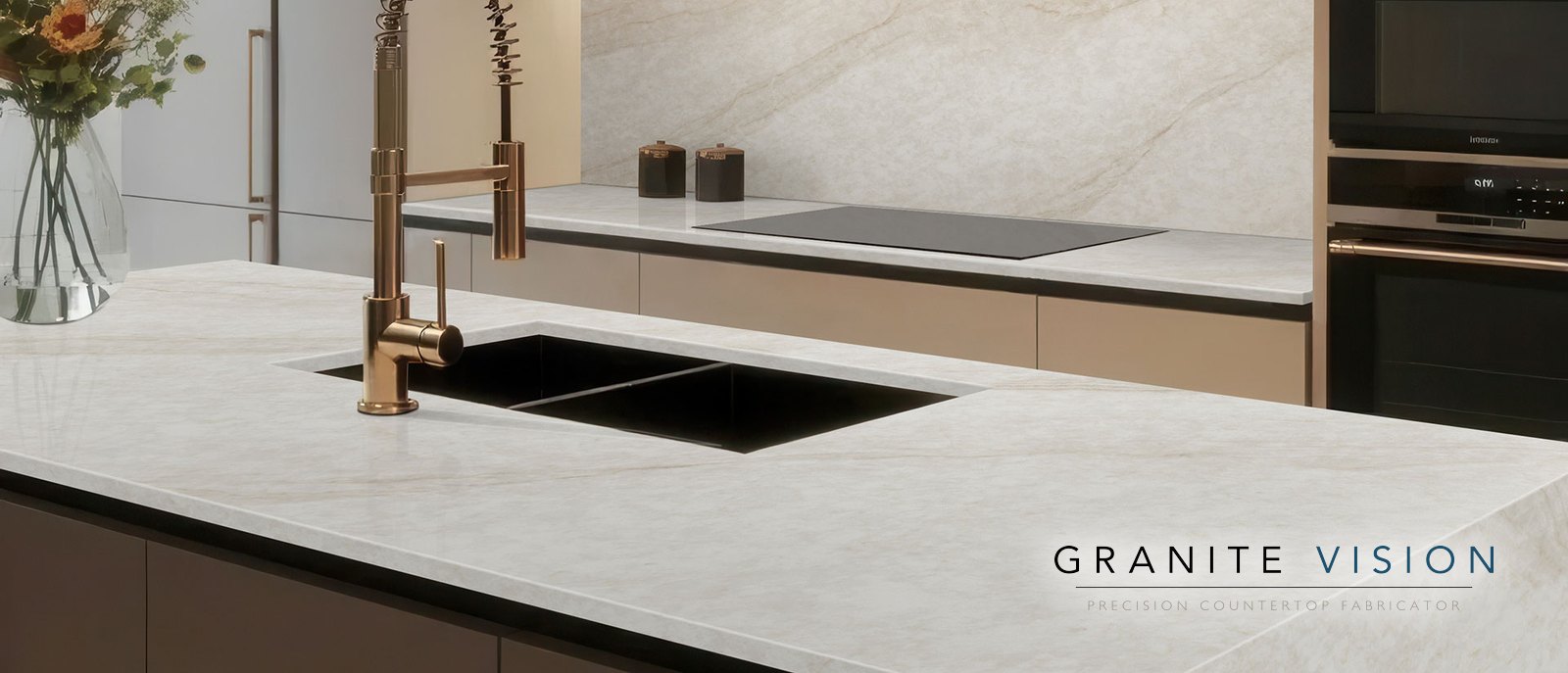
More homeowners are asking us about low-silica quartz. MSI’s Q+ engineered stone line, including IvoryTaj Quartz, is listed by MSI at less than 1% crystalline silica. Here is what that means, why it is getting attention, and which low-silica colors you can choose today.
What is crystalline silica?
Crystalline silica is a natural mineral found in sand, rock and many countertop materials. Traditional engineered quartz is made mostly of crushed quartz, so it can be very high in silica. For example, MSI lists its standard Calacatta Laza quartz slabs at up to 87% crystalline silica. Natural granite typically contains about 10% to 45%.
Low-silica engineered stones like MSI’s Q+ line use a different recipe. MSI describes Q+ as engineered stone on an engineered surface and recycled glass base, and lists each Q+ slab at less than 1% crystalline silica.
Why it is getting attention
The concern is the dust created when slabs are cut, ground and polished in a fabrication shop. Breathing that fine dust over time can cause silicosis, a serious lung disease.
- California’s public health tracking has recorded more than 550 confirmed silicosis cases among countertop fabrication workers, including more than 30 deaths and more than 50 lung transplants.
- Australia banned the use, supply and manufacture of engineered stone starting July 1, 2024.
- In California, regulators have been considering a petition to ban fabrication of engineered stone slabs with more than 1% crystalline silica.
For homeowners: the health risk is about dust during fabrication, not the finished countertop in your kitchen. Once your countertop is installed, everyday use, cooking and cleaning do not create silica dust. Choosing a low-silica product is a way to support safer conditions for the people who cut and install stone.
Low-silica colors from MSI (less than 1% crystalline silica)
- IvoryTaj Quartz: light ivory with soft sandy waves, a Taj Mahal look.
- SoliTaj Quartz: warm cream with rust and gold veins, also inspired by Taj Mahal.
- VelaTaj Quartz: soft white with sweeping gold veins.
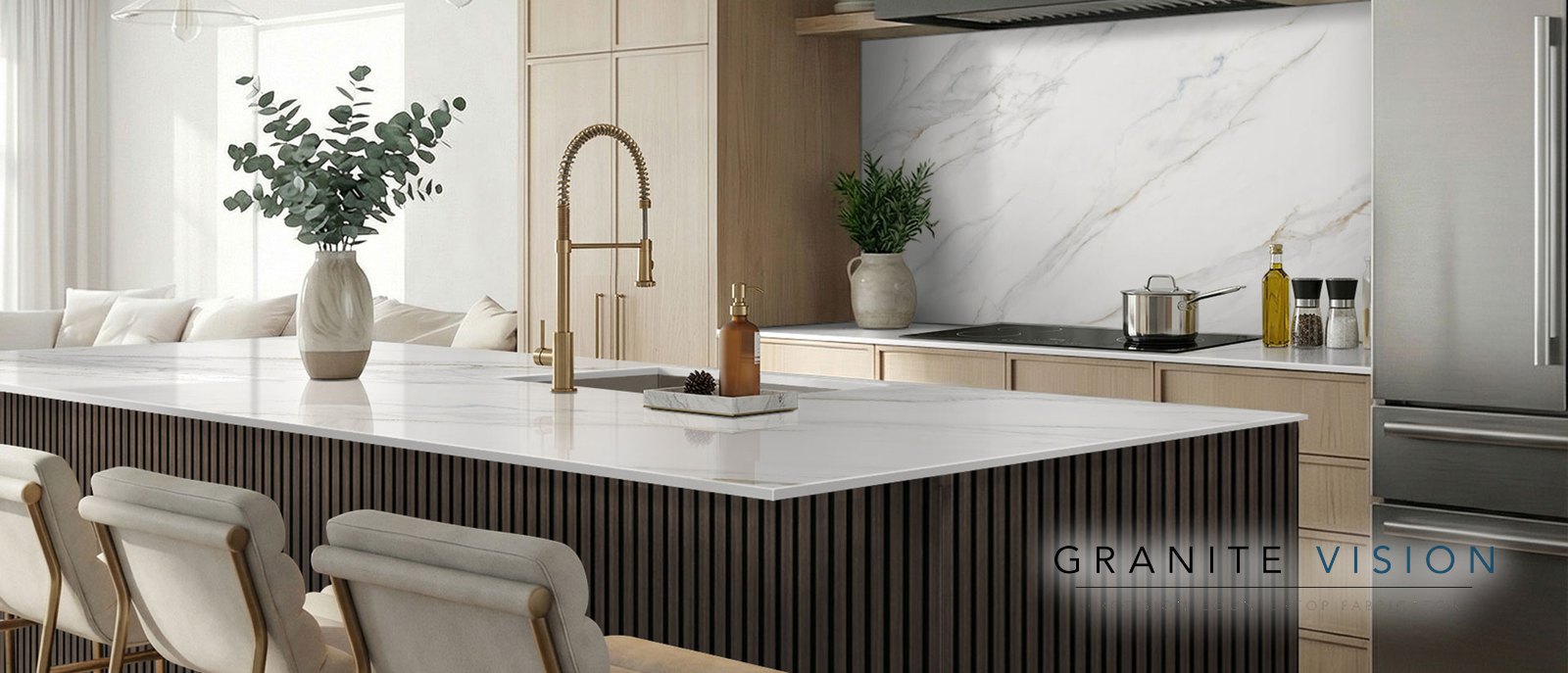
- Calacatta Lapiza Quartz: bright white with blue, gold and gray veins.
- Calacatta Castana Quartz: warm white with blonde, brown and gold accents.
- Calacatta Anava Quartz: cool white with bold gray Calacatta veins.
Availability changes, so ask us which low-silica colors and thicknesses are in stock when you get your estimate.
Low-silica Q+ vs. regular quartz
| MSI Q+ (low-silica) | Regular engineered quartz | |
|---|---|---|
| Crystalline silica (per MSI listings) | Less than 1% | Often very high (MSI lists standard Calacatta Laza up to 87%) |
| Sealing | Never needed | Never needed |
| Stains and etching | Resists stains and etching | Resists stains and etching |
| Heat | Use trivets for hot pots and pans | Use trivets for hot pots and pans |
| Pattern | High-definition printed pattern; MSI recommends mitered edges because the veining is on the surface | Pattern runs through the slab |
The look and daily care are very similar. The main differences are the silica content and edge options, which we will go over with you.
How we fabricate at Granite Vision
We cut every piece in our own shop. Our water jet CNC cuts with water, which helps control dust, and we measure every kitchen with digital laser templating so pieces fit right the first time. We install 5–7 days after templating and back every installation with a 1-year workmanship warranty.
See low-silica colors in person
Visit one of our showrooms in Woodbridge, Stafford, Fredericksburg or Charlottesville, or request a free estimate and tell us you are interested in low-silica quartz. You can also browse all low-silica colors.