
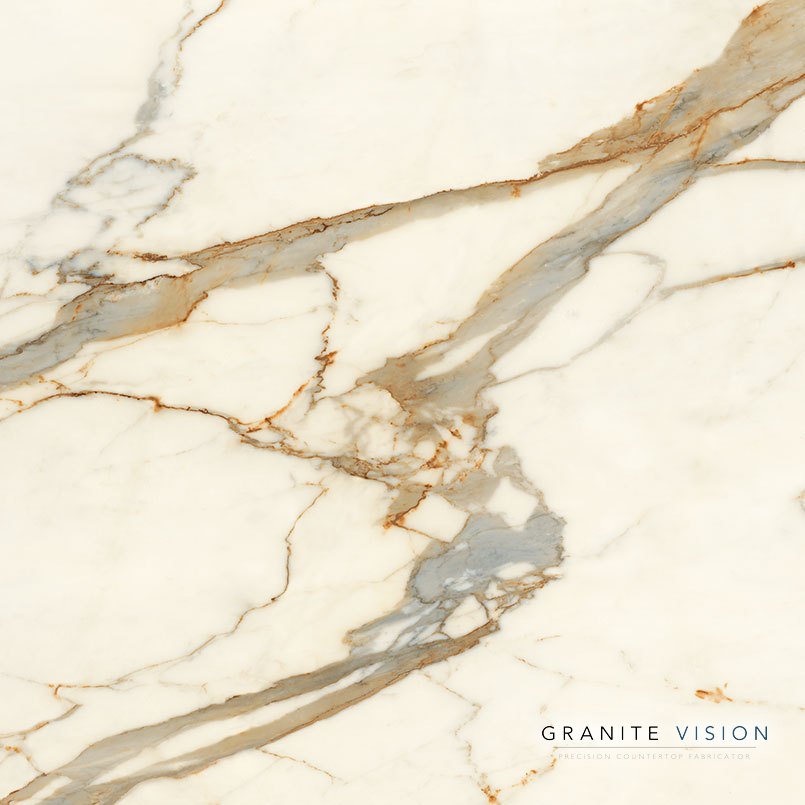
Porcelain vs. Quartz Countertops: Calacatta Marbella Porcelain vs. Calacatta Laza Quartz
If you love the look of Calacatta marble but want something easier to live with, two of the most popular options we install are porcelain slabs and quartz. MSI’s Calacatta Marbella Porcelain and Calacatta Laza Quartz both give you a bright white surface with bold gray and gold veins. They look alike in a showroom, but they are made differently and behave differently in a kitchen. Here is how they compare.
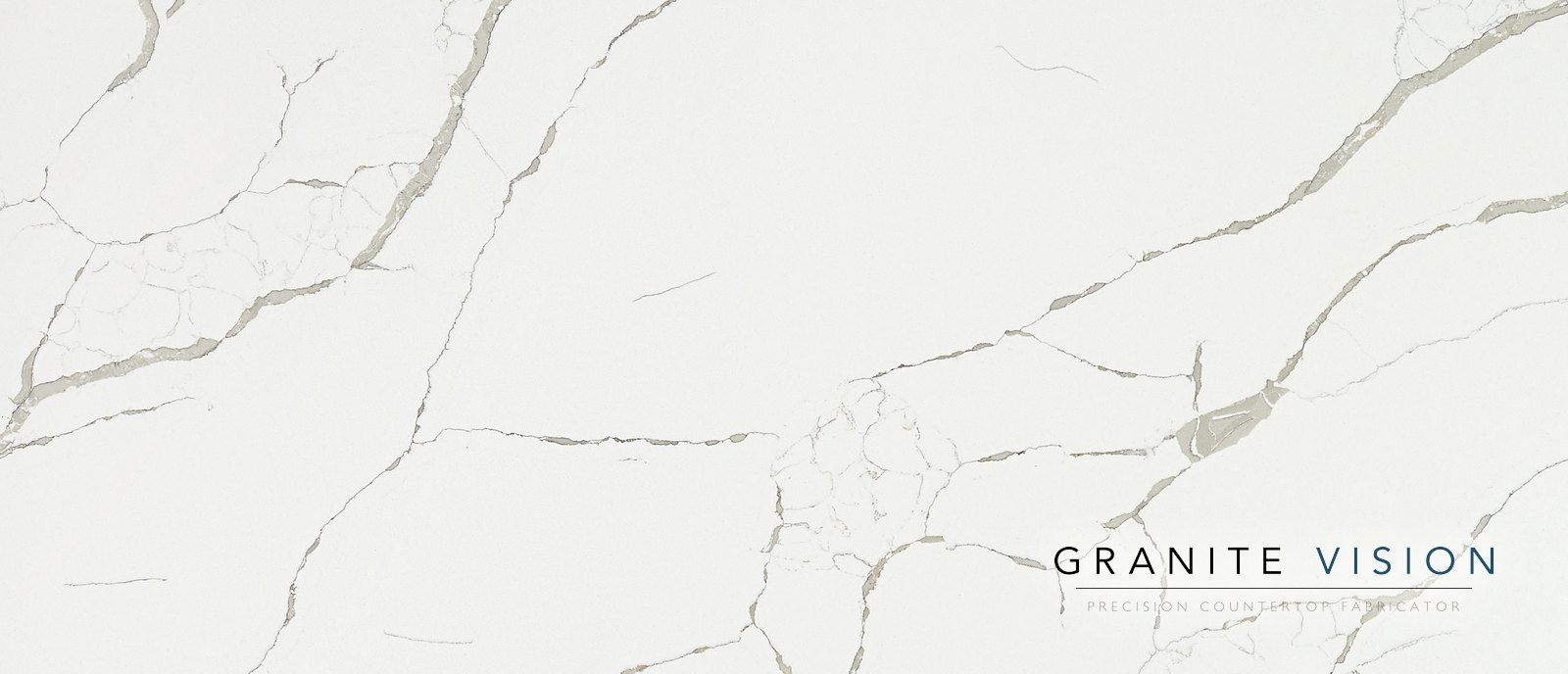
The quick answer
- Choose Calacatta Marbella Porcelain if you want a surface that handles heat and sun, never needs sealing, and can go outdoors or up the wall as a full-slab backsplash.
- Choose Calacatta Laza Quartz if you want a thick, solid-feeling countertop with a classic edge, a consistent pattern, and a material most homeowners already know.
What each one is
Porcelain slabs are made from fine clays and minerals fired at very high heat. MSI sells them as Stile Porcelain. The result is a very hard, dense, non-porous surface. MSI says Stile slabs resist heat, scratches, stains and UV light, and it shows them used in outdoor kitchens and on exterior walls.
Quartz is an engineered stone made mostly of crushed natural quartz bound with resin. MSI sells it as Q Quartz. It is non-porous, so it does not need sealing, and the color and pattern stay consistent from slab to slab.
Side-by-side comparison
| Porcelain (MSI Stile) | Quartz (MSI Q Quartz) | |
|---|---|---|
| Made from | Clays and minerals fired at high heat | Crushed quartz and resin |
| Sealing | Never | Never |
| Hot pans | Resists heat | Use trivets; direct high heat can damage quartz |
| Sun and outdoor use | UV-stable; works outdoors | Indoor use |
| Thickness and edges | Thinner than stone; we often miter the edge for a thicker look | Full-thickness slab; most edge profiles available |
| Things to watch | Avoid hard knocks on edges and corners | Avoid bleach, oven cleaner and other harsh chemicals |
| Installed price at Granite Vision | Ask us for a free estimate | $55–$120 per sq ft |
Heat and everyday cooking
This is the biggest practical difference. Porcelain is fired at very high heat, so a warm pan set down for a moment is not a worry. Quartz contains resin, and direct high heat can scorch or discolor it, so we always recommend trivets next to the range. If you cook a lot and tend to slide pans off the stove onto the counter, porcelain is the more forgiving choice.
Edges, thickness and chips
Porcelain slabs are thinner than stone. For a kitchen countertop we usually build a mitered edge, joining two pieces at a 45-degree angle so the front edge looks thick and the veins wrap around the corner. It is a clean, modern look.
Porcelain is very hard, but its edges and corners can chip from a hard knock, like a heavy pot swung into the corner. Quartz is a full-thickness slab, so you can choose from most standard edge profiles, and it feels like a traditional countertop.
Outdoor kitchens and sunny rooms
Porcelain is UV-stable and holds its color in the sun, which makes it one of our first suggestions for outdoor kitchens. Quartz is made for indoor use. Quartz manufacturers warn that UV light can fade standard quartz and weaken it over time. If your counter sits under a big south-facing window or on a covered patio, porcelain is the safer choice.
Look and design
Both colors have a bright white background with dramatic veins. Calacatta Marbella Porcelain has bold gray, gold and rust veins that sweep across the slab. Calacatta Laza Quartz has bold gray and soft gold veins and is one of the most requested quartz colors in Northern Virginia. Both pair well with white, black or wood cabinets and brass or gold hardware.
Because porcelain comes in large, thin slabs, it also works well on walls. Some homeowners run the same slab from the countertop up the backsplash for a continuous look.
Other colors to compare
If you like one of these materials but want a different look, here are a few more to see in person:
- Carrara Porcelain: white with fine, feathery gray veins.
- Pietra Grigio Porcelain: medium gray, matte, with thin white veins.
- Calacatta Classique Quartz and Carrara Marmi Quartz: two more marble-look quartz colors.
Which one is right for you?
You cook often and want heat resistance
Porcelain is the better fit. It handles heat better than quartz and never needs sealing.
You want a classic, thick countertop
Quartz is the easier choice. It gives you a full-thickness edge in the profile you like and a pattern that stays consistent across a large kitchen.
You are building an outdoor kitchen
Choose porcelain. Quartz is not made for direct sun.
You have kids and busy corners
Both work well. With porcelain, we will talk with you about edge design to protect the corners. With quartz, keep trivets handy.
See both in person
White and veined surfaces look different under your own lighting, so we always recommend seeing samples before you decide. Visit our showrooms in Woodbridge, Stafford, Fredericksburg or Charlottesville. Since 2014 we have completed more than 17,000 projects. We measure with digital laser templating, cut every piece on our water jet CNC in our own shop, and install 5–7 days after templating with a 1-year workmanship warranty. We also remove your old countertops and reconnect the plumbing.
Request a free estimate and tell us you are comparing porcelain and quartz. Or browse all stone colors.